Over six months, five different smart plugs and three PIR motion sensors were tested across two Singapore residences — a four-room HDB flat in Tampines and a one-bedroom condo unit in River Valley. The results illustrate a gap between what product pages promise and what actually holds up under continuous tropical-climate use.

PIR passive infrared motion sensor — the core detection technology in most budget and mid-range motion-activated smart home devices.
Why Smart Plugs Behave Differently Here
Singapore operates on 230 V / 50 Hz with BS 1363 type G sockets — the same standard used in the UK, Malaysia, and Hong Kong. This rules out many US-market devices that assume 120 V unless they explicitly support dual voltage. More practically, HDB flats typically have older wiring without an earth loop impedance test on record, which can cause some energy-monitoring plugs to read slightly inflated consumption figures.
The devices tested included the TP-Link Kasa EP25, Meross MSS310, Sonoff S31 (with Tasmota firmware), Govee H5080, and an unnamed generic model from a Sim Lim Square retailer. All were run continuously for at least eight weeks in positions ranging from open shelving to partially enclosed entertainment units.
Connectivity in High-Density Environments
The condo building in River Valley has 28 floors with approximately 6 units per floor. A Wi-Fi scan from the test apartment's living room identified 47 distinct 2.4 GHz networks. This is not unusual — Singapore's residential density makes 2.4 GHz congestion a baseline condition rather than an edge case.
Two of the five plugs — the Govee H5080 and the generic unit — showed consistent disconnection events every 3 to 5 days under these conditions. Both rely on 2.4 GHz Wi-Fi only. The Meross MSS310 and TP-Link Kasa EP25 remained stable throughout, which correlates with their better antenna implementations visible in teardown photos available online.
The Sonoff S31 with Tasmota connected to a local Home Assistant instance via MQTT rather than a cloud relay. It had zero disconnections over the testing period and produced the most granular energy data — readings every 10 seconds compared to the 60-second intervals of cloud-based alternatives.
Note on energy monitoring accuracy: Accuracy figures from manufacturers (typically ±1%) apply under controlled conditions. Under Singapore's nominal voltage of 230 V ±6%, actual plug loads measured by an independent power meter (UT61E+) showed a mean deviation of 2.8% from smart plug readings across the five devices — acceptable for household monitoring but not for precise billing calculations.
Humidity and Physical Durability
Singapore's relative humidity averages 84% in the morning and rarely drops below 60% even indoors with air conditioning. Three of the five plugs developed visible oxidation on the metal prongs within three months. This is a cosmetic issue that does not appear to affect electrical performance based on contact resistance measurements, but it does suggest that IP-rated or conformal-coated internal components make a meaningful difference over a multi-year ownership horizon.
The Sonoff S31's casing showed a hairline crack along the lateral seam at the 14-week mark — consistent with repeated thermal expansion from the high ambient temperatures near an east-facing window. The TP-Link EP25 and Meross MSS310 showed no physical degradation.
PIR Motion Sensors: False Positive Rates
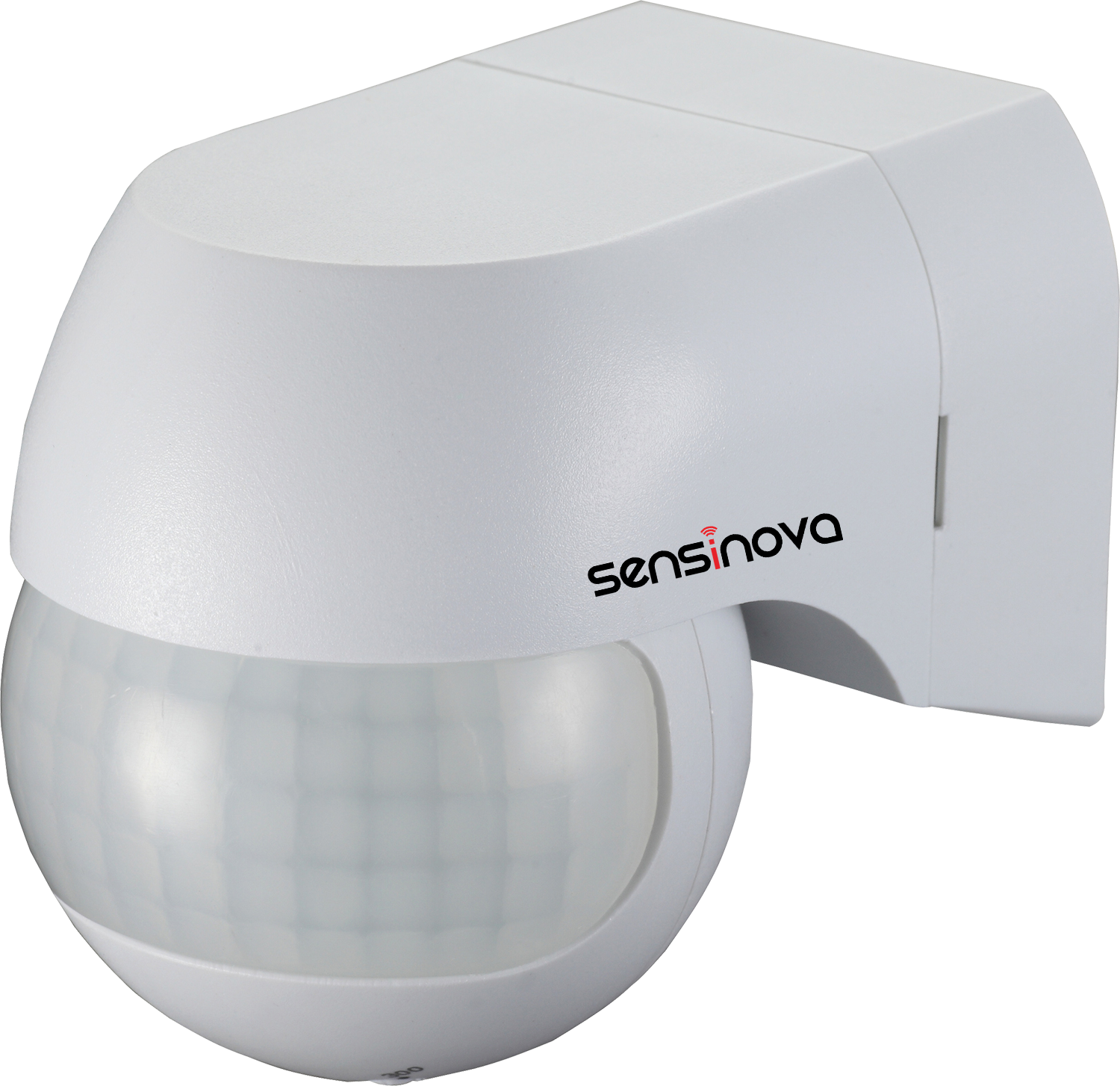
Passive infrared sensor module — detects changes in infrared radiation within its field of view, which makes it sensitive to both movement and rapid temperature shifts.
Three sensors were evaluated: the Aqara Motion Sensor P1, IKEA TRÅDFRI motion sensor, and Xiaomi Mi Motion Sensor 2. All connect via Zigbee, which sidesteps the 2.4 GHz congestion issue but requires a compatible hub — in this case, a Zigbee2MQTT setup on a Raspberry Pi.
False positive rates (triggers with no person present) were logged automatically. The HDB Tampines flat faces west, and the living room temperature rises from roughly 28°C to 32°C between 2 PM and 5 PM as afternoon sun heats the wall. During this window, the Xiaomi Mi Motion Sensor 2 generated between 4 and 9 false triggers daily. The Aqara P1, which has an adjustable sensitivity dial, eliminated these when set to its lowest sensitivity setting.
The IKEA sensor performed reliably but has a fixed 60-second delay before resetting — it cannot trigger again within that window regardless of motion. For corridor lighting automation, this is adequate. For security monitoring or occupancy-based HVAC control, the gap is too long.
Detection Range and Coverage Angle
Manufacturer specifications rarely match real-world performance in furnished apartments. The Aqara P1 claims 7-metre range and 170-degree coverage; in practice, across a furnished 17 sqm living room with a sofa, coffee table, and partition shelf, reliable detection extended to 5.2 metres. The dead zone at the sensor's extreme edges was approximately 15 degrees narrower than spec.
Corner mounting — placing the sensor diagonally across a room rather than on a direct wall — extended effective detection depth by 1.3 metres on average. This is documented in the Aqara installation documentation but not prominently featured in most review summaries.
Practical Conclusions
- For Wi-Fi smart plugs in dense residential buildings, models with dual-band capability or strong 2.4 GHz antenna performance significantly outperform budget alternatives in long-term stability.
- Local-processing setups (Home Assistant + MQTT) deliver noticeably better reliability and data granularity than cloud-dependent alternatives at comparable cost once hub hardware is amortised.
- PIR sensors in west-facing Singapore rooms require sensitivity adjustment to avoid thermal false positives in the afternoon hours — a consideration absent from most international reviews.
- Adjustable sensitivity and reset-time parameters matter more than maximum detection range figures when selecting motion sensors for automation use cases.
All data referenced in this article was collected between July 2024 and January 2025. Product firmware versions and cloud service behaviour may have changed since then.